NEWSROOM
Check out the latest POSCO FUTURE M news and videos.

- Gwangyang cathode material plant supplies high-nickel
cathode materials made with self-sufficient precursors to Ultium Cells in the
United States
- Achieves competitiveness through a self-sufficient
system spanning raw materials, intermediates, and cathode materials amid global
policy changes
POSCO
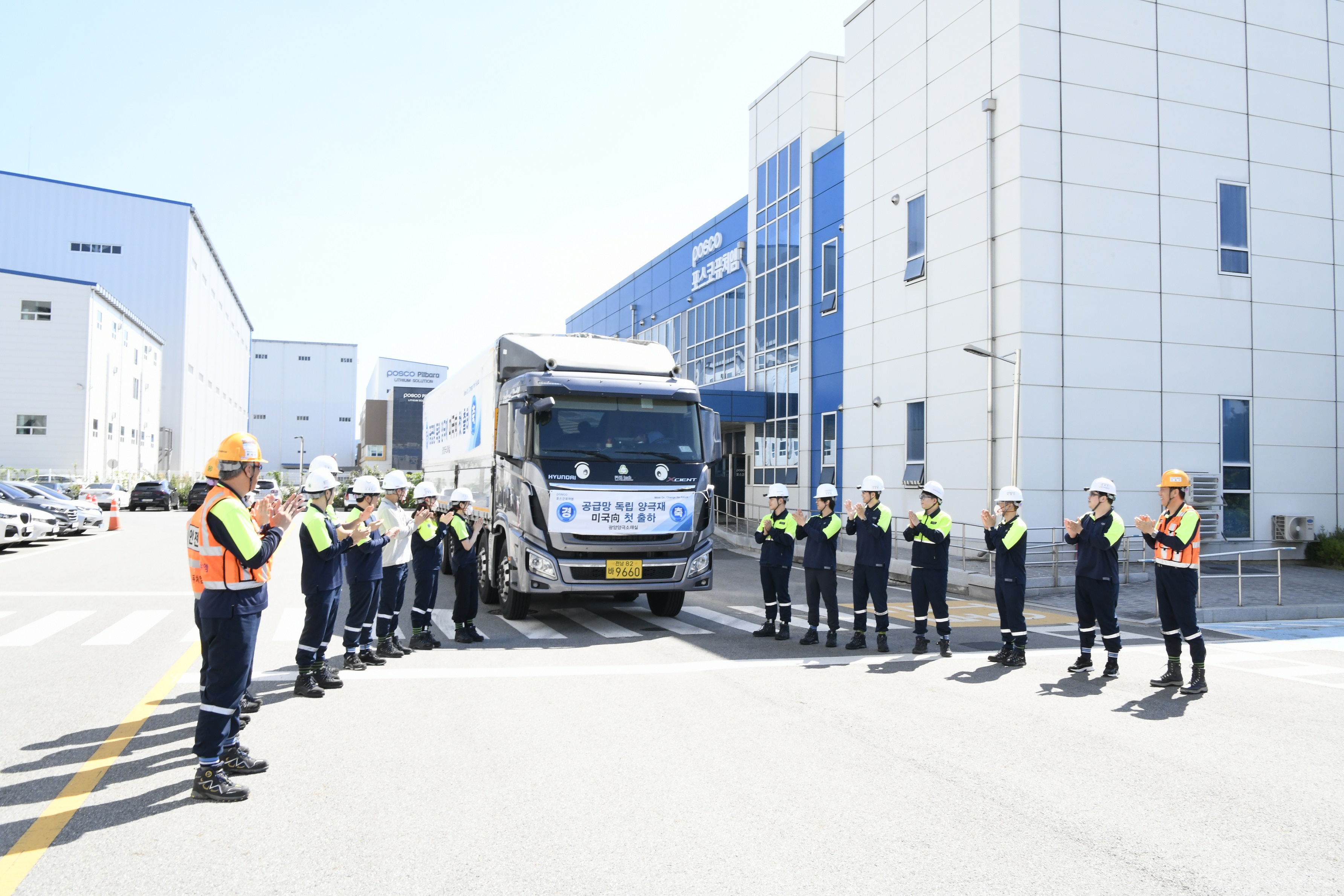
Future M has made its initial shipment of cathode materials produced using
self-sufficient precursors.
These
cathode materials are high-nickel NCMA (nickel-cobalt-manganese-aluminum)
products, characterized by high energy density and output. Ultium Cells (a U.S.-based
joint battery venture between LG Energy Solution and GM) will use them to
manufacture high-performance electric vehicle batteries.
The
cathode materials shipped for the first time on July 26 were manufactured using
precursors produced at POSCO Future M’s precursor plant, which has an annual
capacity of 45,000 tons. The plant was completed on June 10 at the cathode
material plant site in the Yulchon Industrial Complex in Gwangyang, Jeollanam-do
Province. Precursors are composed of nickel (Ni), cobalt (Co), manganese (Mn),
and other materials, and are combined with lithium (Li) at the cathode material
plant to become cathode material products.
As
supply chain regulations on Chinese battery materials are being strengthened in
the global market recently, POSCO Future M has become able to meet the supply
chain requirements demanded by the U.S. market by producing cathode materials
with domestically produced precursors. POSCO Future M plans to begin shipping
supply chain-independent cathode materials to the United States from its
Gwangyang cathode material plant and expand production at the Pohang cathode
material plant as well.
According
to the U.S. tax reduction bill (OBBBA) passed last month, supply chain
regulations are being further strengthened with the establishment of Prohibited
Foreign Entity (PFE) provisions in the Advanced Manufacturing Production Credit
(AMPC), but according to SNE Research, an energy-specialized market research
firm, Korea’s import dependence on China for precursors reached over 90% as of
March this year. Accordingly, Korea’s battery material industry is actively
pursuing the production of cathode materials using domestic precursors to
secure supply chain competitiveness.
Meanwhile, POSCO Future M is expected to gain supply chain competitive advantages over competitors even amid global policy changes by establishing a self-sufficient system spanning raw materials (lithium-nickel)-intermediates (precursors)-cathode materials through group companies including POSCO, POSCO HY Clean Metal, POSCO Pilbara Lithium Solution, and POSCO Lithium Solution.